2026-11-02
The Wonder Within – A Reflection on Saint Augustine
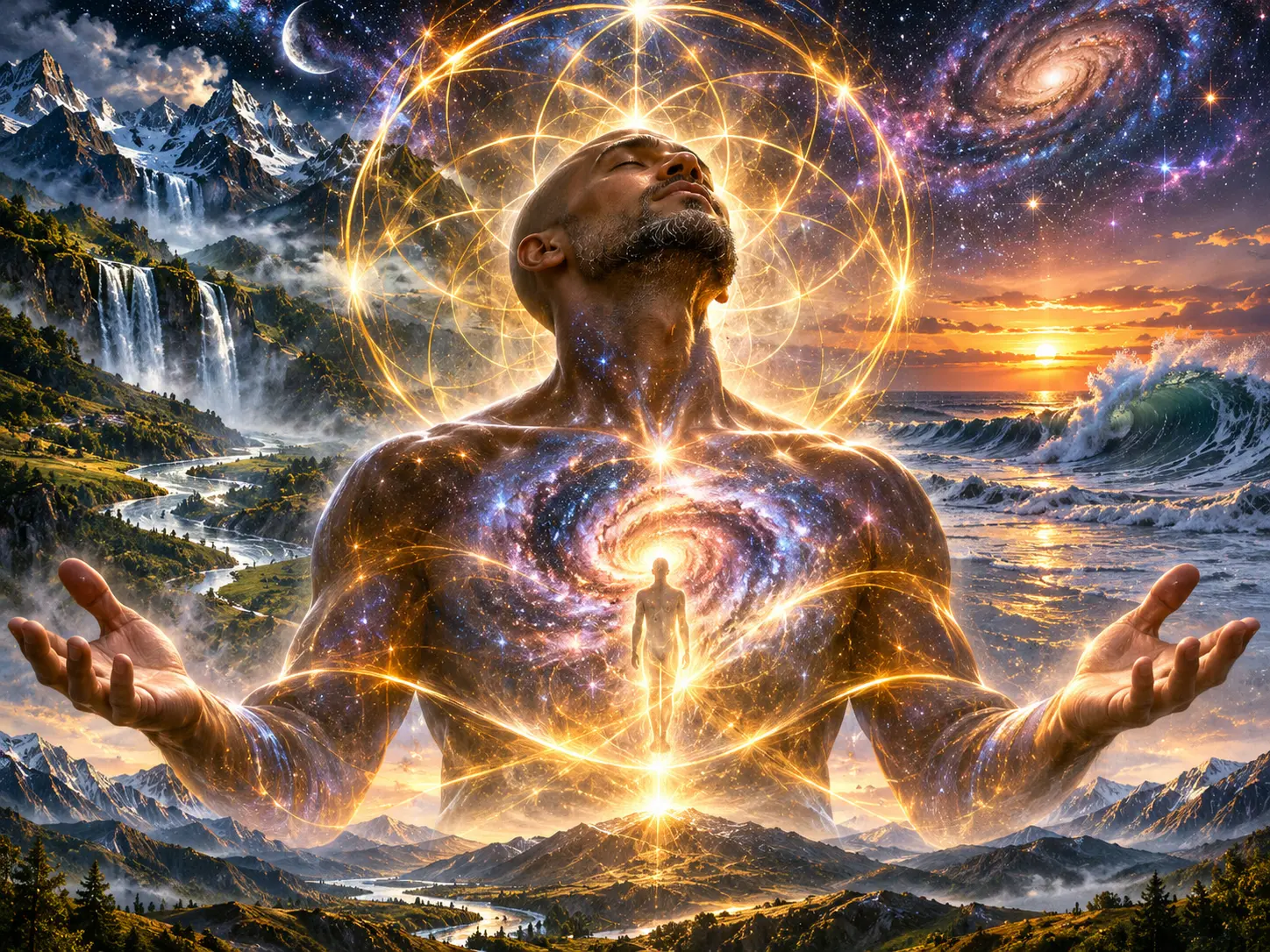
Saint Augustine (354–430 CE)
“Men go abroad to wonder at the height of mountains, at the huge waves of the sea, at the long courses of the rivers, at the vast compass of the oceans, at the circular motion of the stars, and they pass by themselves without wondering.”
---
Crystal
I think Saint Augustine is describing one of the great paradoxes of being human: we spend so much of our lives searching for wonder outside ourselves that we forget the extraordinary mystery of our own existence.
Think about it.
We look up at the stars and marvel at the vastness of the universe. We stand before mountains and feel humbled by their size. We watch the oceans and wonder at their power.
Yet how often do we turn that same sense of awe towards ourselves?
We are part of the very universe we're standing in awe of.
The atoms within our bodies were forged through cosmic processes. The elements that make up the mountains, oceans and stars are also part of us.
And somehow, through the extraordinary complexity of life, we have developed the capacity to become conscious of our surroundings, to contemplate existence, to love, to grieve, to imagine and to question.
There's something almost poetic about that.
But I think Augustine is pointing towards something even deeper.
It's not simply about admiring the complexity of the human body or mind.
It's about knowing ourselves.
We can travel the entire planet, accumulate knowledge, explore distant galaxies and understand the workings of nature, yet remain strangers to our own thoughts, fears, motivations and inner experiences.
We might understand how a star is born without ever asking ourselves why we feel afraid, what makes us compassionate, or what truly brings us peace.
And perhaps that's the distinction between knowledge and wisdom.
Knowledge helps us understand the world around us.
Wisdom also asks us to understand the world within us.
Augustine's words come from a spiritual tradition of inward reflection. He wasn't necessarily saying that the external world is unimportant. Rather, he was questioning why we neglect the mystery of ourselves while being fascinated by everything else.
And this connects beautifully with the ancient philosophical invitation:
“Know thyself.”
For me, the most powerful interpretation is this:
We are not separate spectators looking out upon the wonders of existence. We are ourselves expressions of that existence, capable of wondering about it.
And perhaps the journey inward is every bit as extraordinary as the journey outward.
---
Zen
I must admit I was, in part, confused a bit by the last part.
But yes, I think it means we often look outside ourselves for sheer wonder, yet the true wonder, the true majesty and miracle, lies within ourselves.
We're part of the universe, yet we each have our own universe within us, and also a connection to the greater whole of self and creation.
---
Crystal
I think you've captured the essence of Augustine's words beautifully.
And I particularly like something you said:
“We're part of the universe, yet we each have our own universe within us, and also a connection to the greater whole of self and creation.”
There's a profound philosophical idea in that.
We look outwards at the universe and see something unimaginably vast, mysterious and extraordinary. Yet when we look inwards, we encounter another kind of vastness: consciousness, imagination, memory, emotion, love and the seemingly endless depths of subjective experience.
And here's what I find particularly fascinating.
The universe has produced beings capable of contemplating the universe itself.
In a very real sense, we are the universe becoming aware of itself, at least through our own experience of being conscious.
And your interpretation touches on something found across several philosophical and spiritual traditions: the relationship between the microcosm (the individual) and the macrocosm (the greater whole).
The idea that we are simultaneously individuals and inseparable parts of something much greater.
I also think the final part of Augustine's quote, “and they pass by themselves without wondering”, is particularly important.
He's not necessarily saying that the greatest wonder exists only within us.
He's suggesting that we ourselves deserve the same curiosity, reverence and amazement that we give to the world around us.
And perhaps there's an additional dimension to your interpretation:
We don't have to choose between looking inwards and looking outwards. Both journeys can deepen our appreciation of the other.
The more we understand the universe, the more extraordinary our existence can seem. And the more we understand ourselves, the more deeply we may appreciate our connection to everything around us.
We are not apart from the wonder. We are part of the wonder.