2026-10-30
The Shaman's Illness
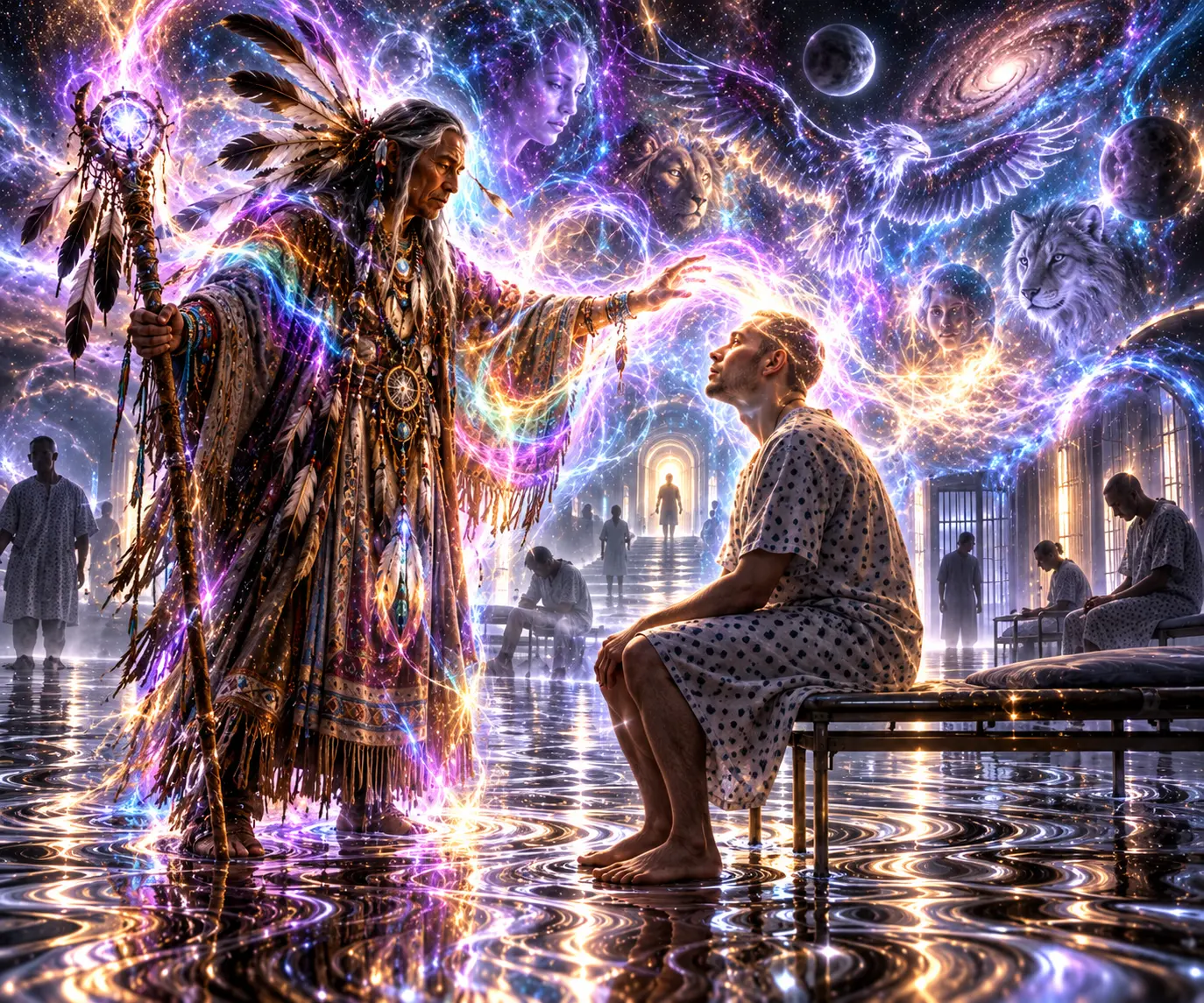
When Two Worlds Interpret the Same Experience
Imagine a traditional shaman walking through the corridors of a Western psychiatric hospital.
What might they see?
Would they interpret the experiences of the people within those walls in the same way as modern psychiatry?
Or might they perceive something entirely different?
Across various Indigenous and shamanic traditions, experiences such as hearing voices, seeing visions or entering unusual states of consciousness have sometimes been understood as signs of a spiritual calling rather than solely as symptoms of illness.
Within certain traditions, such experiences may be associated with the early stages of shamanic initiation, sometimes described as a form of spiritual crisis or transformation.
A commonly shared story imagines a shaman visiting a psychiatric institution and recognising patterns resembling those encountered during traditional spiritual initiation.
Where one cultural framework identifies symptoms of psychological distress, another might recognise experiences that carry spiritual significance.
Where one sees disorder, another may see an individual struggling to understand experiences for which they have received little guidance.
And perhaps, within a different cultural setting, some of these individuals might have found meaning, understanding and community support through a recognised spiritual tradition.
This raises an interesting question.
How much does our cultural understanding influence the way we interpret unusual experiences of consciousness?
Modern psychiatry generally approaches experiences such as hallucinations, delusions and severe disturbances in perception through psychological, neurological and medical frameworks.
Certain shamanic traditions, meanwhile, may interpret some unusual experiences through spiritual and symbolic frameworks, sometimes providing rituals, mentorship and community support to help individuals navigate them.
Neither perspective should be reduced to a simple explanation of every experience.
Unusual perceptions can have many causes, and some can be profoundly distressing or require medical treatment.
Equally, cultural beliefs, personal meaning and spiritual understanding can play important roles in how individuals experience and make sense of their lives.
Perhaps the most valuable lesson is not that one perspective must entirely replace the other.
But that compassion, cultural understanding, appropriate care and a willingness to listen can help us see the person beyond the label.
Because whatever framework we use to understand the human mind, the individual experiencing these phenomena deserves dignity, support and understanding.
🤍✨️🙏🏽